Organic Material Electroforming Kit Copper – Copper Plating Natural Material
With the Galvanizing Shop Organic Material Electroforming Kit, you can provide natural objects with an even, shiny copper layer. First, you make the surface hard and waterproof with a sealer, then you apply a conductive coating and sell the workpiece to a tight result while retaining details. Suitable for flowers, leaves, tree bark, wood, shells and insects, among others. Finishing can be done with patina or with a follow-up metal such as nickel, chrome or bronze.
Coppering organic material such as flowers and twigs – applications and tips
Electroforming makes fragile organic materials durable and dimensionally stable. With the sealer, you seal soft or porous structures so that the conductive paint adheres evenly and the electrolyte cannot penetrate. Popular projects include copper-plating flowers and leaves for jewelry and decoration, small twigs and bark, shells and feathers for accessories, and non-live insects for scientific or artistic objects.
What is the difference between the galvanizing shop electroforming kits
All electroforming kits have the same basic content, with the exception of the conductive coatings and sealers. These differ per kit so that you use the right conductive coating for your material. You are free to test conductive coatings and sealers on a variety of objects and materials. You are not bound by what is in the title or description.
Watch the electroforming video below
The video below explains how to set up a bath, make an object conductive and then copper-plate it.
Included in this kit
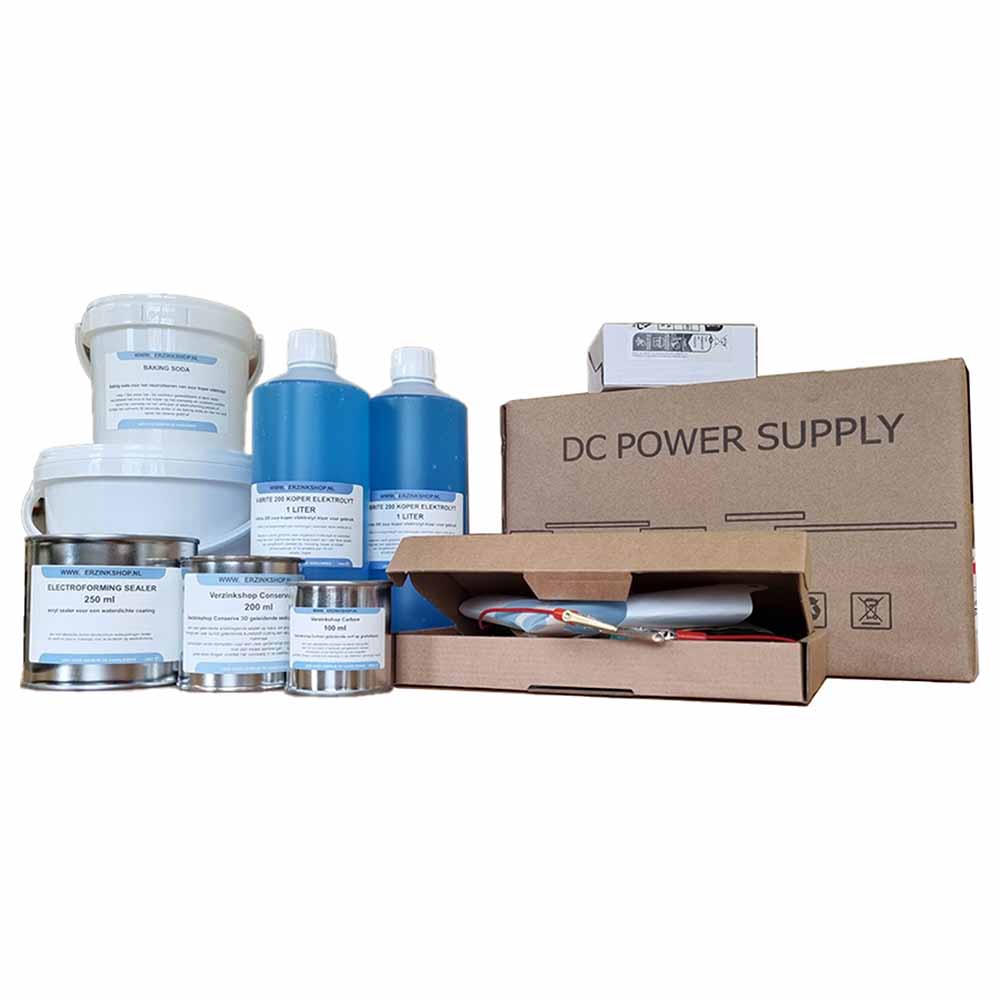
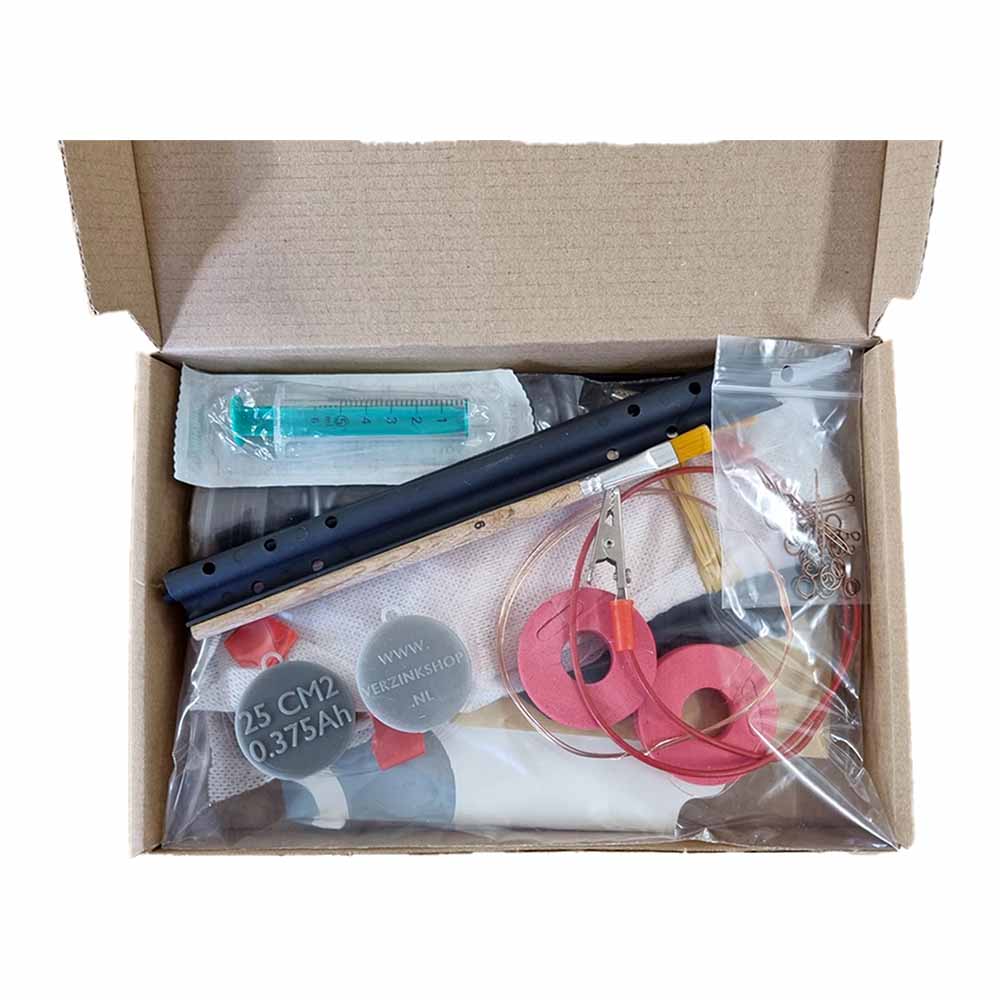
The Galvanizing Shop Organic Material Electroforming Kit includes choose a variation for details
- Bucket
- Galvanizing shop V-Brite 200 acid copper electrolyte
- Galvanizer copper rinse aid V-Brite X with dosing syringe
- 2 × Galvanizing shop copper anode
- 2 × anode filter cloth
- Connection cable for the anodes
- Circulation pump
- Nylon rod with clamps for hanging objects
- 2 meters of 0.5mm copper wire
- 2 meters of 0.25mm copper wire
- 2 × 20 cm copper wire 2 mm for hanging anodes
- 2 x 3D PCB Test Plate
- 2 meters of nylon thread
- Brushes for the conductive paint
- Stirrers for the conductive paint
- About 10 connecting rings copper
- About 10 eye pins copper
- Fine sanding sheet
- Liquid filters for filtering contaminated electrolyte
- Baking soda for neutralization plus bucket
- Gloves
- Clear manual
- Optional lab power supply can be ordered
- 5 amps with 3 liter kits
- 10 amps with 6 and 12 liter kits
Supplied sealer and conductive paint
Also take a look at other variants for conductive coatings and find accessories for electroforming accessories.
Advantages of the Organic Material Electroforming Kit
- Makes soft and porous materials suitable for an even copper deposit while retaining details
- Sealer seals organic material watertight so that the conductive layer adheres evenly
- Good adhesive layer for subsequent layers such as nickel, chrome or bronze
- Suitable for home use
- Easy to set up and use
Properties of the V-Brite 200 acid copper electrolyte
- Works on conductive paint, brass, copper and nickel
- V-Brite 200 is very suitable for flexible or soft base material – the copper layer is soft and detail-retaining
- In combination with V-Brite X, ensures a constant clear copper layer
- Works at room temperature
- Applies a thin glossy layer of copper that retains fine details
- Operates between 0.1 and 0.3 amps per 10 cm² guide value 0.2 amps per 10 cm²
- The copper comes from the anodes, replace them when they are used up
- Long shelf life with proper maintenance
- Contains no cyanides
Copper-plating organic material – step-by-step plan
- Clean and dry the object carefully remove loose particles
- Apply a coat of Galvanizing Shop Electroforming Sealer to form a hard waterproof base on large objects
- use conductive paint Conserve to make small objects waterproof and conductive in 1 step
- Apply a conductive paint – choose Carbon or Conserve and let it dry evenly
- Hang two copper anodes in the bath and connect them to the red plus of the power supply
- Place the nylon rod on the bucket and hang the workpiece with copper wire in the electrolyte
- Connect the black negative of the power supply to the workpiece and make sure that plus and minus do not touch each other
- Set the power supply to 0.2 amps per 10 cm² of workpiece area and start the process
- Check periodically and stop when the desired layer thickness is reached the time depends on surface current density and desired thickness
Various finishing options
You can finish the copper with a patina for an aged look. You can also apply follow-up layers such as nickel, chrome, bronze and more.
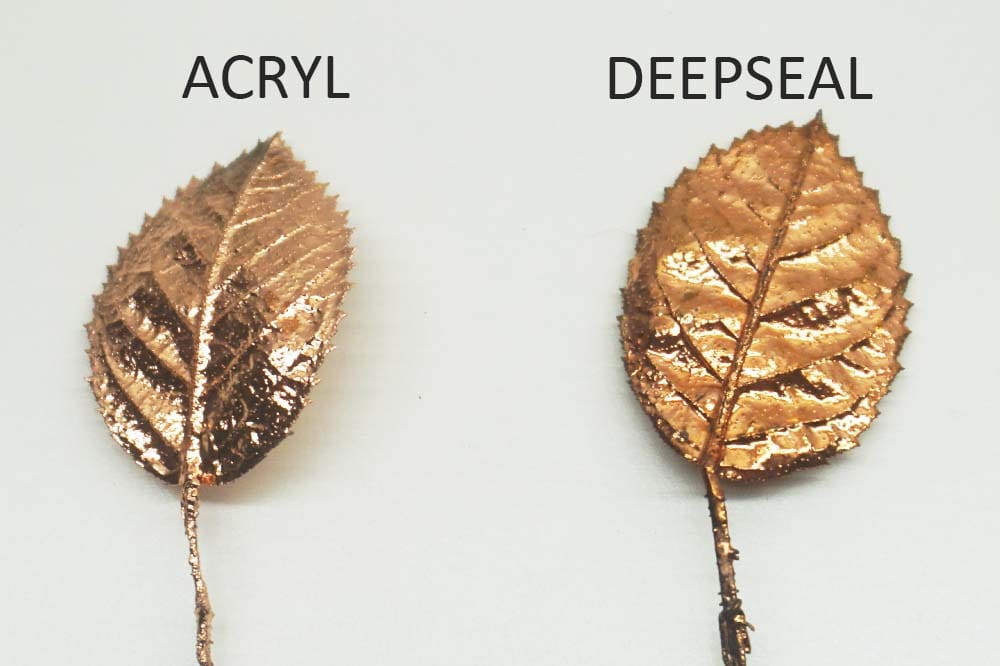
Finishing your electroforming project with a sealer
To stop natural discoloration due to patina or to protect the workpiece, you can apply a sealer. You can use an oil-based sealer such as Galvanizing Shop DeepSeal Sealer or the Electroforming Acrylic Sealer. Without a sealer, copper will naturally patinate and further discolor.
Electropolishing fluid for copper electroforming objects
Have workpieces come out of the bath dull or has a dark oxide layer formed? Then look at our electropolishing liquid for a quick clear finish.








Sophie Weidele (verified owner) –
Goede kwaliteit en uitstekende service
*eric Dumont (verified owner) –
Not used yet, but a clear and clear manual